
Policy Impact Analysis Platform
Turn legislative proposals into district-level insight
Lebra Impact helps school leaders analyze policy and funding proposals, understand district-level impacts, and communicate clearly with stakeholders — all in one place.

How It Works
From proposal to district insight in three steps

Association uploads the proposal
Upload a policy proposal, funding scenario, or legislative proposal. The platform identifies key provisions, funding changes, and potential areas of district impact.

District leaders review local impact
Each district receives a personalized impact analysis showing projected funding changes, per-pupil effects, and plain-language explanations tailored to their district.

Leaders communicate with stakeholders
District leaders generate impact summaries and prepare communications to help inform board members, staff, families, community members, and other stakeholders using their own voice and discretion.
What Districts See
A real example of district-level impact analysis
When an association uploads a policy, each superintendent receives a personalized view of how the proposal affects their district. Below is what a superintendent at Springfield Public Schools would see for Missouri's SB 727 school funding policy.
View Example Analysis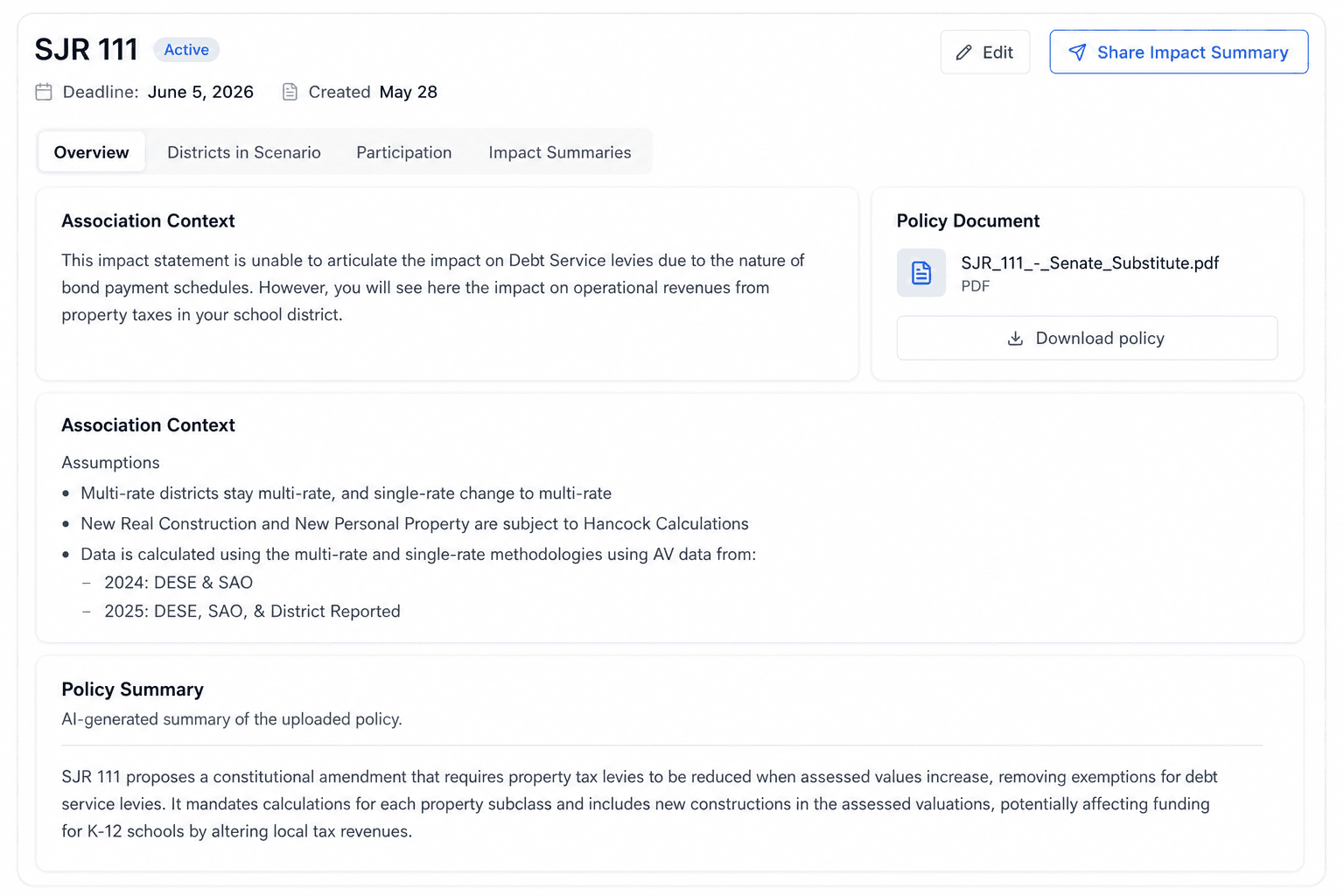
Platform Features
Everything you need for policy impact analysis and communication
Impact Modeling
Automatically model district-level financial impacts from policy, funding, and legislative proposals with detailed analysis.
Stakeholder Communication
Prepare personalized impact communications for stakeholders using your own voice and connected email account.
Impact Summaries
Generate clear, localized impact summaries tailored to each district's enrollment, financial, and operational data.

Ready to help leaders communicate with clarity?
Contact us to learn how Lebra Impact can help your association inform its superintendents.
Request a Demo